When you look at the address bar in your browser, you might notice a small padlock icon next to the URL. That padlock signifies that the website is using HTTPS rather than plain HTTP.
That single letter "S" stands for Secure, and in today's digital landscape, it is absolutely non-negotiable for any serious business website.
As we've discussed before, HTTP is the protocol that carries data between your browser and the website's server. However, standard HTTP sends this data as "plain text."
This means that if a malicious actor intercepts the traffic on the network—say, on a public Wi-Fi at a coffee shop—they can read exactly what you are sending. If you type a password or a credit card number over standard HTTP, it is exposed for anyone listening to see.
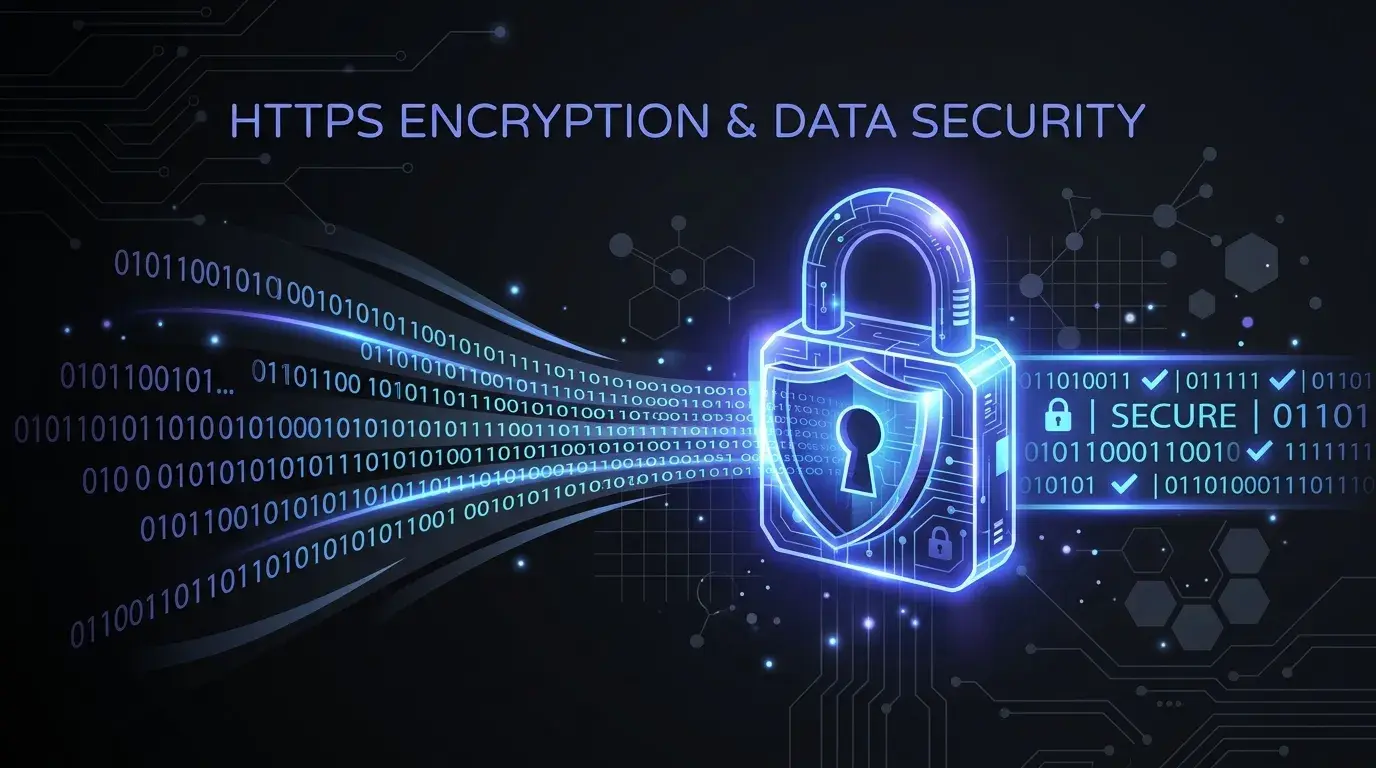
HTTPS (Hypertext Transfer Protocol Secure) solves this problem by wrapping the standard HTTP communication in a layer of strong encryption. This encryption is facilitated by an SSL/TLS Certificate.
When a website uses HTTPS, the data is scrambled into an unreadable string of characters before it leaves your device. Only the intended server holds the digital "key" to unscramble it. Even if a hacker intercepts the data, all they will see is gibberish.
If your website handles user logins, contact forms, or payments, encrypting that data is your legal and moral responsibility. Browsers like Google Chrome will actively warn users with a stark "Not Secure" warning if your site lacks HTTPS, instantly killing customer trust.
Google has officially stated that HTTPS is a ranking factor. If you want your website to appear on the first page of search results, an SSL certificate is mandatory. A competitor with an encrypted site will outrank you if you're still using plain HTTP.
Modern web technologies, such as HTTP/2 (which is significantly faster and more efficient), require an encrypted connection to function. By switching to HTTPS, you unlock access to these performance upgrades.
Securing your website shouldn't be an afterthought. Every website we build at Creativolks comes with robust encryption, modern SSL certificates, and best-in-class security practices out of the box.
Don't let a "Not Secure" warning cost you clients.
Let's talk about your project. Free consultation, no commitment.
Get a Free Consultation